
Roads Worth Traveling: Michelin-Starred Dining Around Biarritz
When you hear the name “Michelin”, one does not immediately think of tires anymore. However, rewind 126 years, and Michelin tire company debuted with its inaugural coveted Michelin guide. As a way to market tire sales, the guide was published, and in 1926, the first Michelin stars were released, paving the road to culinary excellence and pride to this day.
If you are unfamiliar with the prestigious guide, it categorizes restaurants in three forms. One star: a very good restaurant in its category offering cuisine prepared to a consistently high standard. Two stars: excellent cooking and expertly crafted dishes where the personality and talent of the chef are evident; worth a detour. Finally: three stars, exceptional cuisine where cooking is elevated to an art form; superlative dishes that are destined to become classics and are worth a special journey.
Clermont Ferrand, the city in which Michelin was founded, is only a six hour drive from Biarritz. Basque country has been on the radar for the Michelin brothers since the early days, and offers one of the highest concentrations of Michelin star restaurants in the world. Some range as classic institutions with decades of history, while others try to break the status quo and open doors to your senses through their cooking.
Here is a small guide showing you the variety of nouvelle cuisine and contemporary cooking that takes place all within about two hours of Biarritz. We’ll break it down by distance in case a long(ish) journey is not what you have in mind.
Near Biarritz (within 30 minutes)
La table d'Aurélien Largeau
French haute cuisine, led by chef Aurélien Largeau and sommelier Mathilde Fesneau. Their ethos heavily revolves around the ocean’s bounty. Basque and French wines bolster the menu, with starting prices generally starting around €105.
Briketenia
An enduring restaurant located in a boutique hotel, known for its refined taste, but exceptional warm hospitality. Traditional Basque game featuring local producers.
Moulin D’Alotz
17th century water mill turn restaurant, Moulin D’Alotz is a star in the plant based fine dining scene in France. Floor to ceiling windows, with the backdrop of lush green gardens and scenic countryside. 100% vegetarian, the restaurant focuses on amplifying flavors of vegetables with intricate, refined sauces. Prices start at around €111.
San Sebastian (within ~45mins)
Arzak
Led by father and daughter duo Juan Mari Arzak and Elena Arzak, this restaurant is globally renowned and is the prominent figure in what Basque cuisine is today. The restaurant even hosts a laboratory for R&D.
Akelarre
Also recognized as one of the godfathers of modern Basque cuisine, Akelarre offers a dramatic view of the Bay of Biscay. The food is classic Basque ingredients reinvented by textures and technique. Prices start around €370 for the tasting menu, however a la carte is also an option.
Mugartiz
One of the most experimental in the region. This restaurant aims to break boundaries of eating. Dishes are often theatrical and experiment with diners’ senses. One of Spain’s most popular restaurants.
Getaria, Spain (1-1.25 hours away)
Elkano
Founded in 1964, locals and seafood pilgrims have flocked here for one thing, grilled whole turbot. Simple, no frills. Just one great product cooked with care, precision, and love.
Kaia Kaipe
Also driven by low intervention cooking, Kaia Kaipe showcases their local seafood by grill on open charcoal, and letting the natural flavors of their local catch speak for themselves. Less formal than Elkano, however technique and flavor are not sacrificed.
Axpe Marzana & Uria ( 1.5-2 hours away)
Asador Extebarri
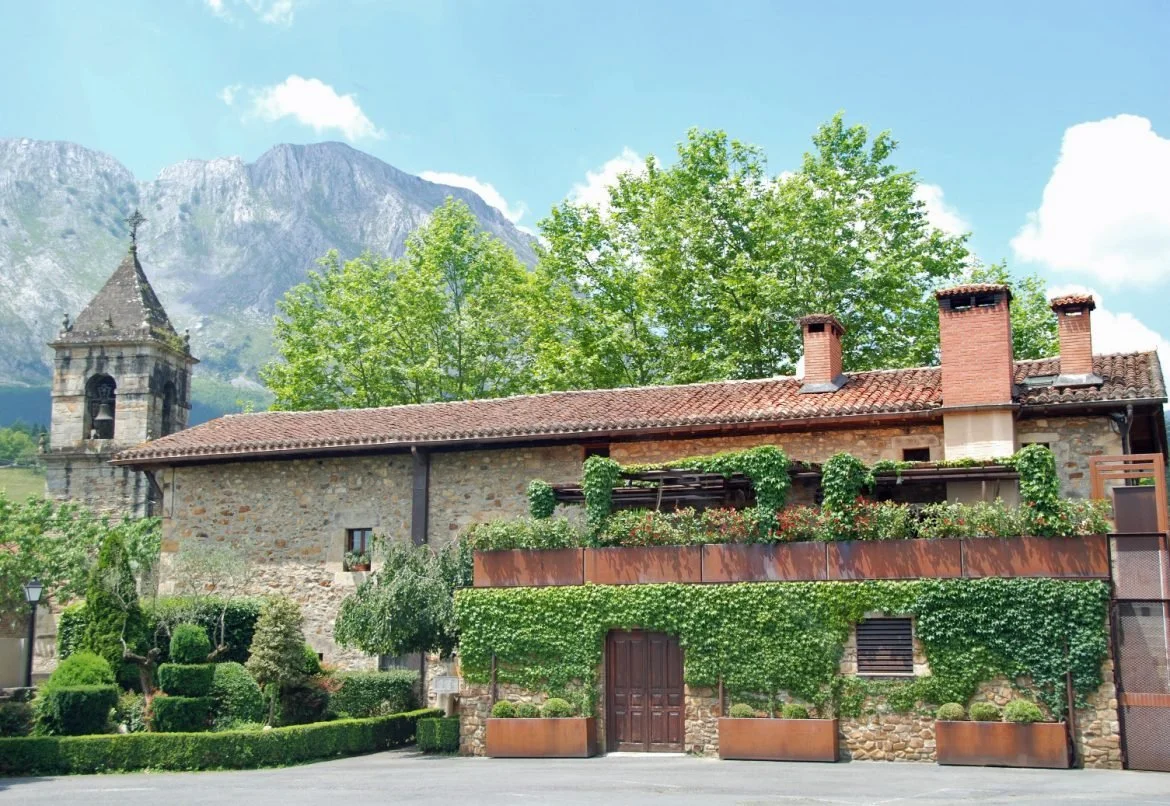
Known for live fire technique, Asador Extebarri uses coals, embers, wood, and smoke to transform simple ingredients into culinary masterpieces. Located near the Anboto mountains, the rural atmosphere offers an insight into some of the ingredients used at the restaurant.
Azurmendi
Hosting an unconventional dining experience, guests move from different locations on the property to physically see where their food is coming from. The ingredients, scents, and visuals are meant to pair with the storytelling behind Chef Eneto Atxa’s food.