

The Architecture of Ritual: Bathing Culture
San Francisco once had bathhouses across the city.
What would it mean to design for ritual again?
The Architecture of Ritual: Why Bathing Is Back
Last month, we were invited by Canopy to host a curated conversation on bathing, architecture, and slowness. We invited Fjord, Studio Ahead, Studio Anand Sheth, and The Ofuro Company, with moderation by Flora Tsapovsky.

“I think site matters a lot and what's really special about the Bay Area is we have the fog, we have the salty water, we have mountains and hills and valleys and occasionally torrential rain—but imagine having bathing experiences that extend beyond just the shower,” shares Maggie Spicer, founder of The Ofuro Co. and WHISK.
Today’s modern obsession with bathing culture enters the scene at an interesting inflection point. From historical and centuries-old traditions such as onsen in Japan and saunas in Scandinavia, we are returning to a point in life of socializing communally, largely without alcohol, and at a level pure enough to access the nervous system, within seconds.
For those of us dwelling in cities—where it’s typically proven challenging to find a communal bathing environment near nature, the arrival of the trend is changing the landscape for unplugging nearly as swiftly as stepping out of the office for a coffee. “Programming has allowed us to speak more eloquently and more directly about resetting the nervous system versus maybe what we used to call it—zoning out, or getting out of dodge, or whatever else you used to do for isolation—this is like a way of saying you don't actually have to isolate in order to reset,” shares architect Anand Sheth. Now, you don’t have to isolate, and you don’t have to leave the city to find an authentic sense of calm.
So why is the sauna receiving so much attention? You have Othership in New York, Fjord, Sauna Day, Onsen, Alchemy Springs, and more in the San Francisco Bay Area. Sant Roch recently opened in Paris, and there are numerous saunas in London. Because it’s one of the few places you literally can’t bring your phone with you. It would overheat, at a minimum. “It's interesting. I'm somebody who's always on my phone and I used to self-regulate on my phone, but when you’re in a sauna, you literally cannot use your phone because it's wet, it's hot, it gets overheated, it's fogged up, right? So it kind of brings you to another level of relationship with your nervous system, which to me has been a discovery this past year and I absolutely love it,” says Flora Tsapovsky, culture writer based in San Francisco and our panel moderator. “Last year, there was an article in the Wall Street Journal that said that the sauna is the best place to network,” Tsapovsky remarks.
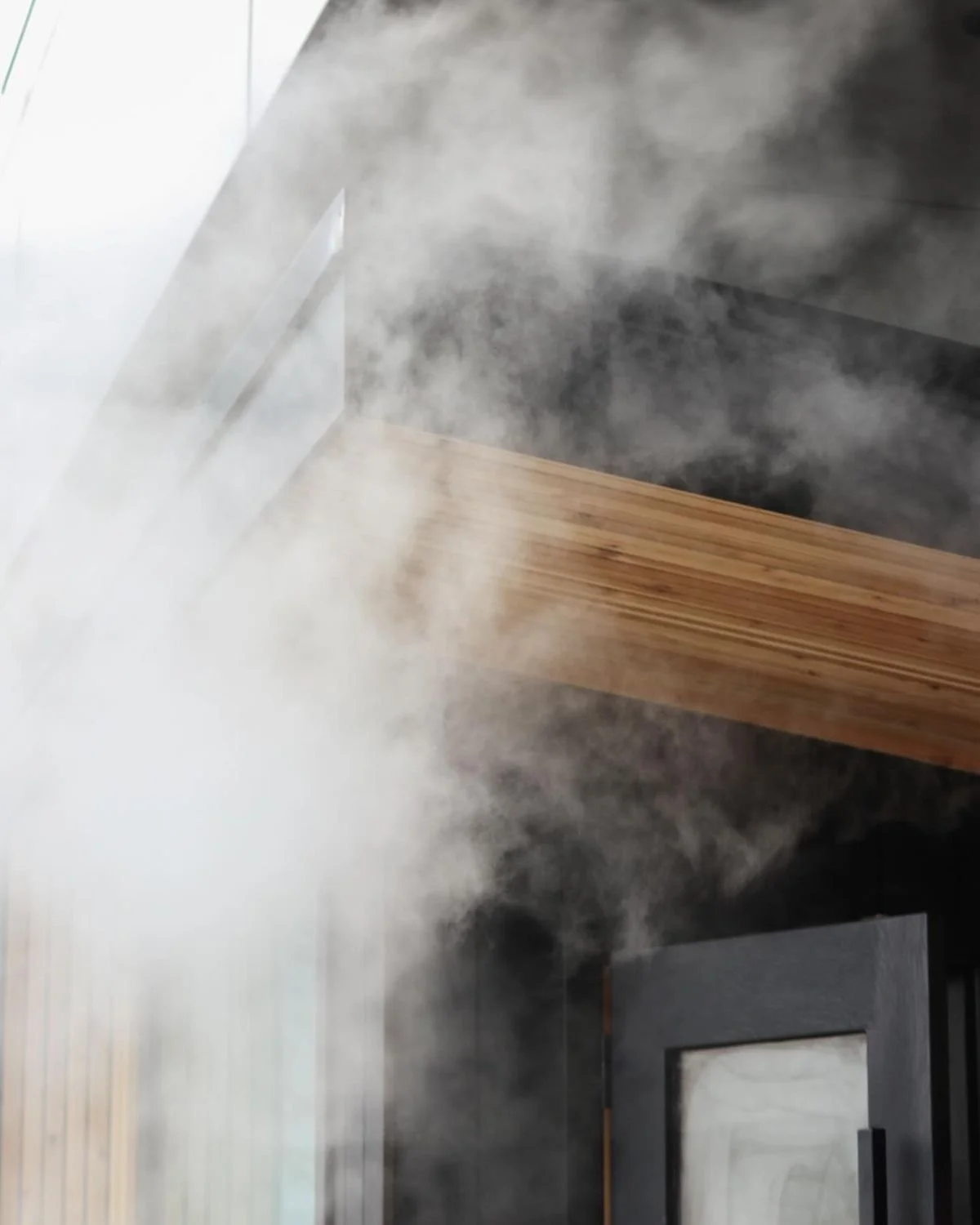
Steam emanating from a sauna
“So, do you feel like there's a lot of room to educate people here or expose them to things specifically in San Francisco? And how do you go about it in a way that speaks to San Francisco, like hustle culture, optimization, and all of this conversation?” prompts Tsapovsky. “I remember that article, the Wall Street Journal article,” says Alex Yenni, co-founder of Fjord. “There was also a parallel to this ‘business bro’ networking angle. Then we have the biohacking ‘Joe Rogan’ kind of sauna guy. And then we had this kind of very social movement introducing the EDM, the music, and the party, particularly at Othership in New York,” Yenni continues. “And then there was a funny article last week in the New York Times, basically with pan-Europe responding like, 'guys, chill out.' Like it's just kind of hit the scene here and we've tried to take these practices and turn them into every little, you know, Americanism that you would imagine—the business networking, the socializing, the dating, the music. And I think their response to all of that is like, 'you need to chill out’ and pull it back a little bit and learn how to be in your own body by yourself in that moment without so much external stimuli around your heart rate or the deal you're working on or whatever and so it's so hilariously American at its core and kind of counter to the original intentionality behind it,” he concludes. Indeed, in its typical maximal way, mainstream American culture is aiming to maximize returns, on a few levels.
“I think there's probably some good education to be done around that. We've really been very intentional in our own language and branding to try and weed out a certain type of [profile]. For instance, very early on there was a lot of 'Can you guys put a thermometer in here?' And I started asking some Finns and they said, 'Look, this is the wrong question to be asking. I would remove it—it takes people out of the moment.’ They start thinking about metrics and ‘Rogan told me I needed to be in 100 degrees for 15 minutes’ and then go in the cold and this and that…” adds Yenni.
And it’s true. So often in today’s world, we don’t need yet another external marker signaling to us that we’re in the zone or we’ve ‘hit the mark’. Instead, we ought listen to the wisdom of our bodies, or our elders, for that matter.
Which is precisely where the Ofuro comes to mind. “If you think about how an Ofuro is structured, it's more important that the side walls of the tub are deeper than the width so that when you immerse your body, the water covers the heart. The design is really important for calming the nervous system,” shares Spicer. “Often, we'll get requests from folks in the West asking: 'Why is it this width? Can it be larger? Can it be wider? Can you play with the dimensions?', Spicer relays. “There's a reason that it's structured the way it is. It's traditional, but it's also part of the physical experience of being in it. When you have the hot water above your heart, it lowers the heart rate within the first 60 seconds.”

An Ofuro
“One of the first differences I noticed between bathroom design in America and Europe is the preference for showers over bathtubs, which really surprised me,” shares Elena Dendiberia, co-founder of Studio Ahead. “In Europe, bathing often feels more integrated—less segmented, more fluid. I started analyzing why that is. Maybe because we have the illusion of constant access to water, even though a lot of people don't really like interacting with water or don’t swim or plunge in the Bay, for example. Instead, the shower becomes a kind of controlled, insulated experience of water. Yet, I feel there is another spiritual approach to how we design bathrooms—how [we choose to engage with water] and how you actually want to function in your bathroom,” Dendiberia opines.
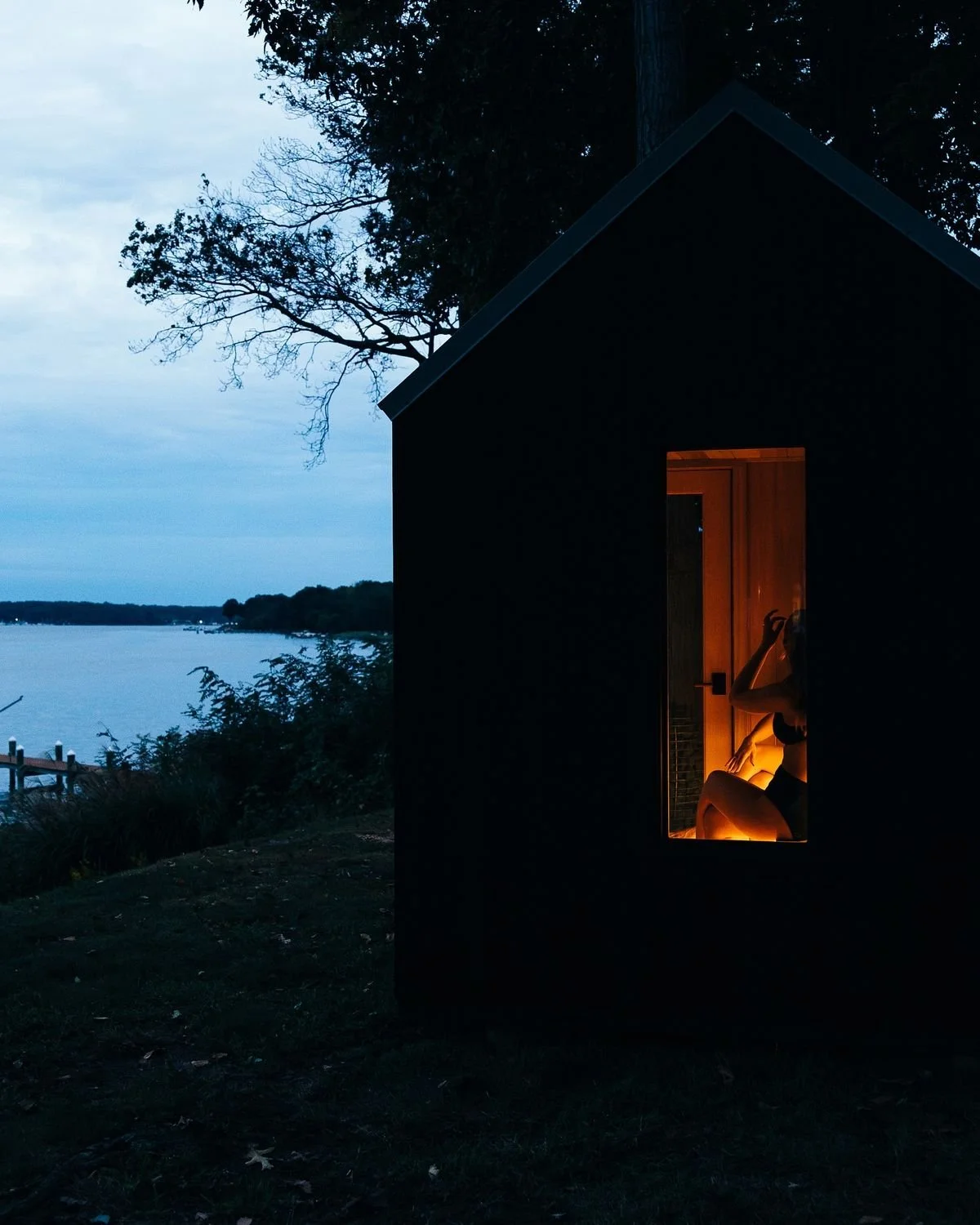
Regardless of how you opt to engage with contrast therapy, we hope these excerpts from the panel inspire curiosity in how you design your own bathing ritual(s) and find meaning in the gentle yet provocative embrace of water (and heat) against your skin.